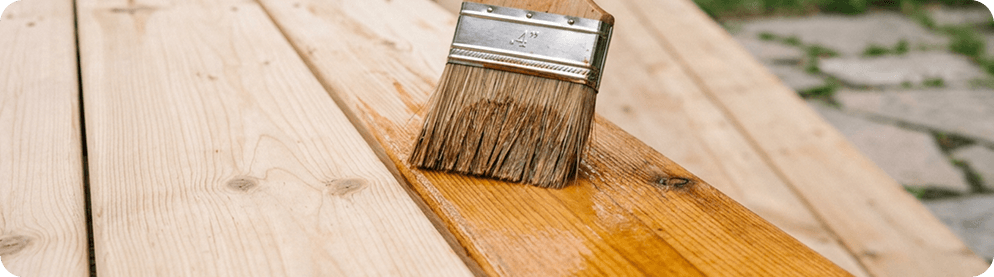
Your deck, fence, or exterior wood trim looks weathered and gray. You head to the hardware store, buy a few gallons of stain, and plan to spend a weekend brightening up the wood. It seems like a straightforward project that will protect your investment and make your outdoor space look new again.
But when it comes to exterior wood staining, there is a massive difference between a surface that looks refreshed for a season and one that actually receives lasting protection against Ottawa's harsh climate.
Before you apply that first coat, it is important to understand why wood staining is as much about preservation as appearance and why shortcutting the process dramatically shortens your wood's lifespan.
1. The enemy within: why wood fails
Exterior wood is under constant attack from multiple directions:
- UV radiation breaks down lignin, the natural "glue" that holds wood fibers together, causing graying and surface erosion.
- Water penetration swells and shrinks wood cells, creating cracks, warping, and splitting.
- Mold and mildew feed on wood sugars and create discoloration and rot.
- Insect activity from termites, carpenter ants, and wood-boring beetles.
Stain is not just about color it is a protective barrier that must address all these threats simultaneously while still allowing the wood to breathe. Plastic like paints that fully seal the wood trap moisture inside, accelerating rot from within.
2. The preparation reality check
Here is where most DIY staining projects fail: inadequate preparation.
Wood that has been exposed to Ottawa weather for years accumulates:
- UV-damaged fibers that create a fuzzy, gray surface.
- Mold, mildew, and algae growth in shady or protected areas.
- Old, failing stain that has lost its adhesion and water repellency.
- Dirt and pollution that prevents new stain from penetrating.
Proper preparation requires:
- Professional-grade cleaning solutions that kill biological growth.
- Pressure washing at the correct PSI to remove damage without damaging wood.
- Brightening agents that restore pH balance after cleaning.
- Sanding or stripping to remove old, failing coatings.
- Adequate drying time (typically 24 to 48 hours minimum).
Skipping or rushing these steps means applying expensive stain over damaged wood, dramatically reducing protection and lifespan.
3. The product type decision
Not all stains are created equal, and choosing the wrong type guarantees disappointment:
- Transparent stains: show maximum wood grain and texture but offer minimal UV protection (typically 1 to 2 years lifespan). Best for: new wood where you want maximum natural appearance.
- Semi-transparent stains: balance grain visibility with moderate UV protection (2 to 3 years lifespan). Best for: most exterior applications where you want wood character without annual maintenance.
- Semi-solid stains: hide more grain while providing better UV protection (3 to 5 years lifespan). Best for: older wood with imperfections or high-UV exposure areas.
- Solid stains: almost completely hide grain but provide maximum protection (5 to 7 years lifespan). Best for: heavily weathered wood, vertical surfaces, or applications where appearance matters less than longevity.
The DIY reality: most homeowners grab whatever looks good on the shelf without understanding how product type, application method, and expected lifespan relate to their specific wood condition and exposure.
4. The application technique that determines success
Staining requires precise conditions and technique:
- Temperature: must be between 10 to 32°C (50 to 90°F) for proper penetration and curing.
- Weather: no rain forecast for 24 to 48 hours after application.
- Moisture content: wood must be below 15% moisture content (professional meter recommended).
- Application method: brush, roller, or spray depending on product and surface texture.
- Coat thickness: too thick = tacky, peeling finish; too thin = inadequate protection.
Professional applicators understand how product chemistry, weather conditions, and application technique interact to create a lasting finish. They also know how to address problem areas: end grain (absorbs 10 to 15x more stain than face grain), vertical vs. horizontal surfaces, and shaded vs. sun-exposed sections.
The verdict: protection that pays for itself
When you consider the true cost of wood staining, you are not just buying stain. You are investing in proper preparation tools, quality products matched to your wood's condition and exposure, and the expertise that ensures maximum protection and longevity.
A properly stained and maintained deck or fence can last 20+ years, while neglected or improperly protected wood may need replacement within 5 to 7 years. At current lumber prices, professional staining is not an expense it is insurance that dramatically extends your wood's lifespan while maintaining its natural beauty.
Investing in professional wood staining delivers protection that stands up to Ottawa's freeze thaw cycles, intense UV exposure, and precipitation patterns. It preserves your outdoor investment, reduces long-term maintenance costs, and keeps your exterior wood looking beautiful year after year rather than season after season.